The things you do here rather than look at — with season, time needed and the question that comes before every booking.
Last updated:
An attraction is a place: you go, you look, you move on. An
activity is something you do — and almost always something you book. That
changes the planning entirely: there is an operator, a slot, a set of prerequisites and a
weather risk, and for most of them a travel pass is worth nothing, because it covers
nothing. This page carries the 3 activities with a page of their own, plus the
walks that need no booking at all.
The 3 booked activities, side by side
The booked activities compared side by side
Destination
From Interlaken Ost
Price
What is a pass day?
One pass day is CHF 80 — the Berner Oberland Pass for 3 days (CHF 240), divided by 3. One-way fares are counted as return trips for this comparison.
Travel times: fastest public connection from Interlaken Ost to the destination itself — for mountain destinations that means the top station, not the valley station. Where the last stretch is on foot, a sourced walking time is part of the figure; where none is sourced, the figure ends at the last station. The destination page says which was measured. Places in town are walking times.
Adult prices, as of the date at the foot of this page. Cableway and boat fares vary by route, travelcard and guest card.
One pass day is CHF 80 — the Berner Oberland Pass for 3 days (CHF 240), divided by 3. One-way fares are counted as return trips for this comparison. What else costs what here
Flying, whitewater, boats
Three offerings that differ in almost everything except this: each happens on a particular
day or not at all. Two of them you book with an operator; the third runs to a timetable.
In the air
Interlaken has what almost no alpine destination has: a landing field in the middle of
town. The Höhematte has been protected from development since 1864, which is the only
reason tandem wings touch down every few minutes where hotels would otherwise stand.
Launches are from the slopes above. What sets this one apart from everything else here is
its cancellation rate — it hangs on the weather of the day, not on the season.
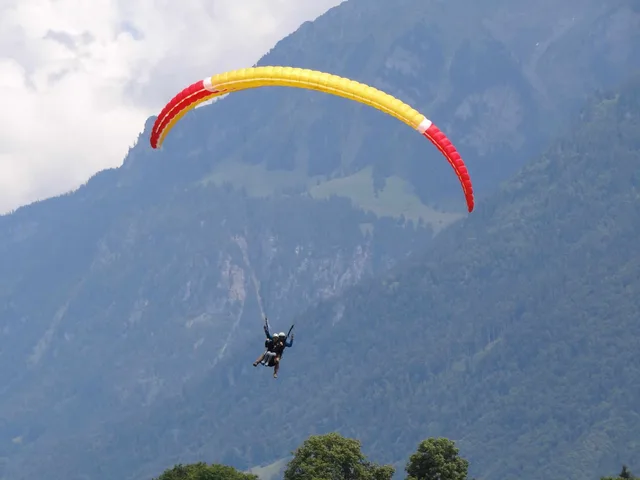
Tandem flights launch from Beatenberg or the Harder and land on the Höhematte in the middle of town. Depending on the thermals the flight lasts 10 to 20 minutes — flights are cancelled for wind and rain, often at short notice.
Weather-dependent and cancelled at short notice — book it for your first day, not your last.
Adrenaline Getting there: 11 min · On foot
In whitewater
The adventure-capital reputation comes from the gorges around Saxeten and from the
Lütschine. Both are booked tours with pick-up in town — there is no station you travel to,
which is why the table above shows no journey time. Minimum ages and swimming requirements
are set by the operators, and they set them differently.
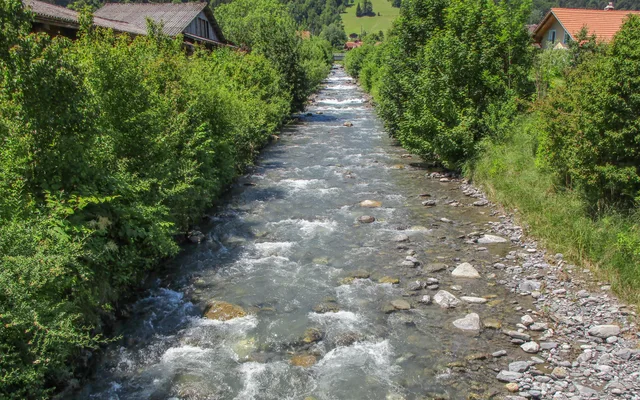
Interlaken calls itself the adventure capital, and the gorges around Saxeten and the Lütschine are the reason. Operators pick you up in town; minimum age and swimming requirements differ from tour to tour.
Minimum ages and swimming ability vary by operator. Not a spontaneous afternoon.
Adrenaline
On the water
The boats are the exception in this section: no booking, no minimum age, no operator to
choose — a scheduled service, and the only thing on this page a travel pass carries in
full. If you are expecting a quick sightseeing loop you are on the wrong boat; it stops
often and it is slow, and that is the point of it.
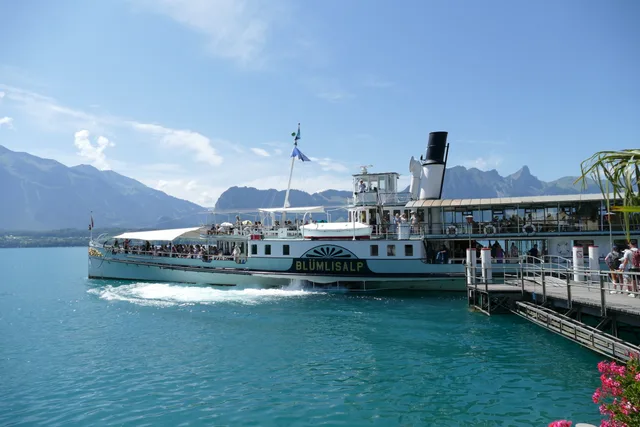
From the pier at Interlaken West the boats pass castles, vineyards and the St Beatus Caves on the way to Thun. The finest stretch lies between Interlaken and Spiez.
Fully covered by the Swiss Travel Pass and the GA — one of the few things here that is.
Boat trip Getting there: 5 min · Train
Lake Brienz has its own scheduled network; the
run to Iseltwald and the Giessbach Falls is described there.
On foot
Walking is the activity with no operator: nothing to book, no minimum age, nothing to
cancel. At most you pay for a mountain railway — and on two of the 4 pages
below, not even that. The figures live on the route pages, because a walking time belongs
in one place rather than two.
Every route with verified distance, ascent, walking time and grade — and the travel time from Interlaken Ost to each trailhead, because a hike you cannot reach is not a hike.
Three different hikes share this name. The ascent from Interlaken Ost, the summit loop and the exposed ridge — with the figures for each and the funicular alternative.
Two different walks carry this name, and which one you read about decides the grade you find. With the escape routes, the water question and both sets of figures.
Ridge walk
Insider Tip
The order of your days matters more than the choice of activities. Whatever can be
cancelled — the flight, canyoning, rafting — belongs at the start of the trip, because
then there is a second attempt. Whatever always works — the boats, the Höhematte, the old
town — will carry the bad-weather day at the end.
And in winter?
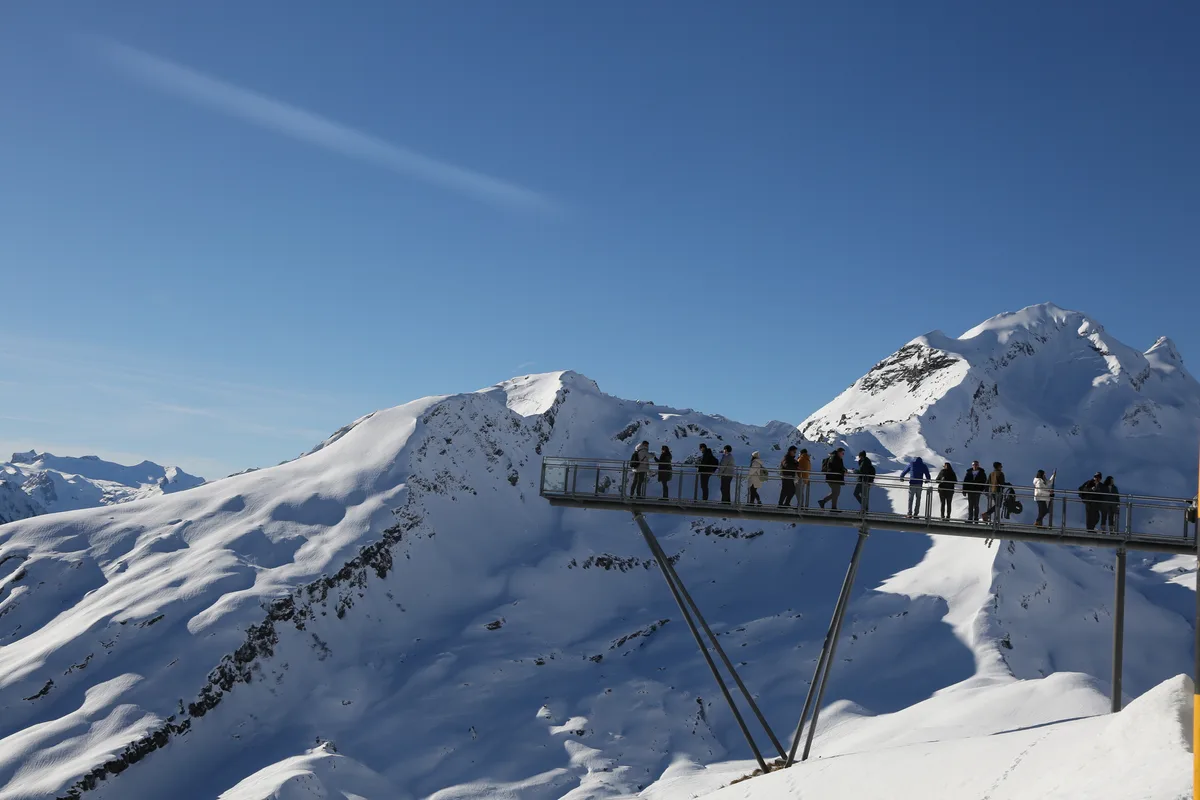
Half of what is on this page stops. Canyoning and rafting are summer-only, the boats on Lake
Brienz stop on 7 December while those on Lake Thun keep sailing, and the funicular you can
see from the station shuts on 29 November. Tandem flights run all year. Which of the
region's destinations are actually reachable between December and March — and which are
open but a different thing entirely — is a table of its own.
The mountains, lakes, waterfalls and caves have a section of their own — every destination
with its travel time from Interlaken Ost, what it costs and how long it takes, plus an
orientation map showing how far apart they really are.
What counts as an activity here, and what counts as an attraction?
An attraction is a place: you travel to it, look at it, and travel on. An activity is something you do, and almost always something you book — with an operator, a slot, prerequisites and weather risk. The difference is practical rather than cosmetic: an attraction is a morning decision, an activity is a weeks-ahead one. Both sections are reachable separately from the navigation, and the comparison table on the attractions page still lists every destination together.
Does the Swiss Travel Pass cover any of these?
Only the boats. Scheduled sailings on Lake Thun and Lake Brienz are fully included in the Swiss Travel Pass and the GA — one of the very few things in this region a pass carries in full rather than at a discount. Tandem flights, canyoning and rafting are booked services from private operators, not transport: no pass covers them, not even partly. That is where an Interlaken budget most often goes wrong.
What is available in which season?
Canyoning and rafting run in summer only; outside the season there are no departures. The boats run a dense summer timetable; on Lake Thun a much thinner one continues through the winter, on Lake Brienz they stop altogether. Tandem flights are offered year-round but depend on the weather of the day rather than the season. Walking runs from spring into autumn depending on altitude — the ridges hold snow earlier and longer than the valley suggests.
How far ahead should you book?
The boats not at all — they run to a timetable and you get on. For the tandem flight, canyoning and rafting the booking is the activity: high-season slots are limited, and flights are cancelled at short notice on top of that. Put the flight on the first day of your trip rather than the last, so that a cancellation still leaves you a second attempt.
Can children take part?
On the boats, without qualification. Canyoning, rafting and tandem flights have minimum ages, and they differ by operator and by tour — there is no single limit, which is why no figure is given here. If you are planning with children, confirm the age limit before booking rather than after.