In short
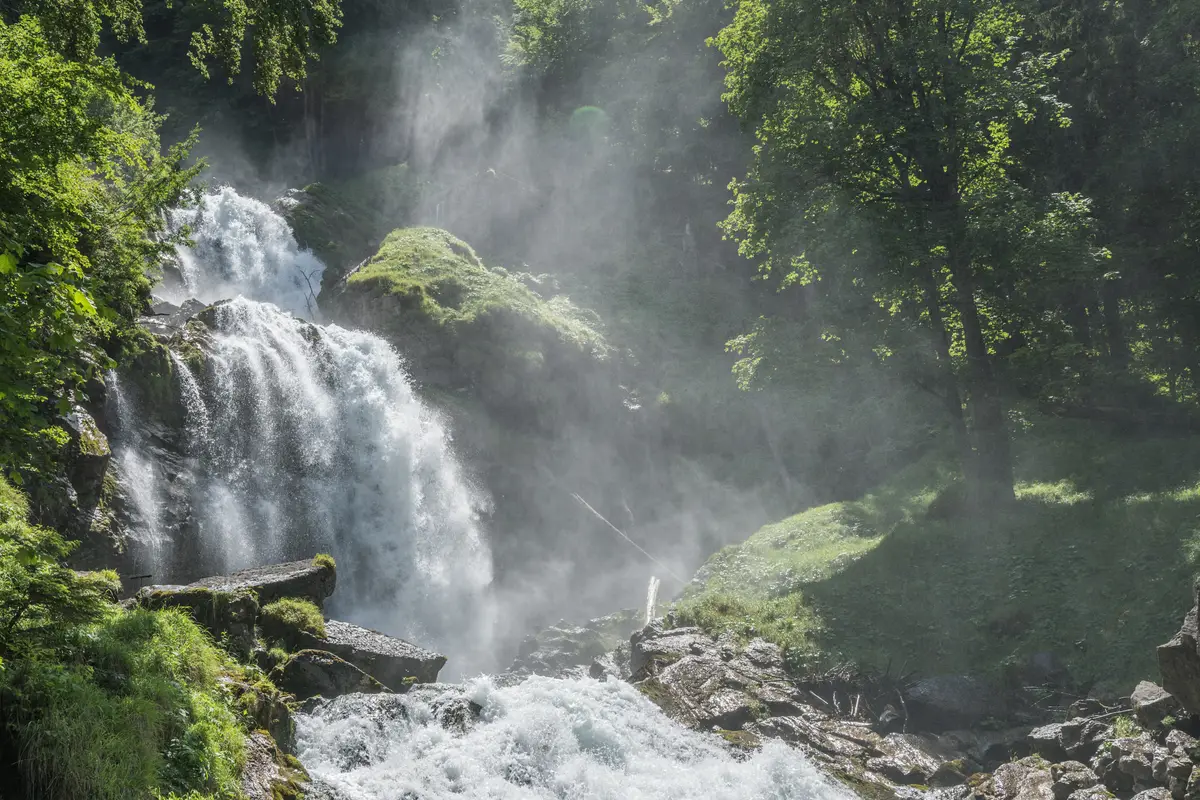
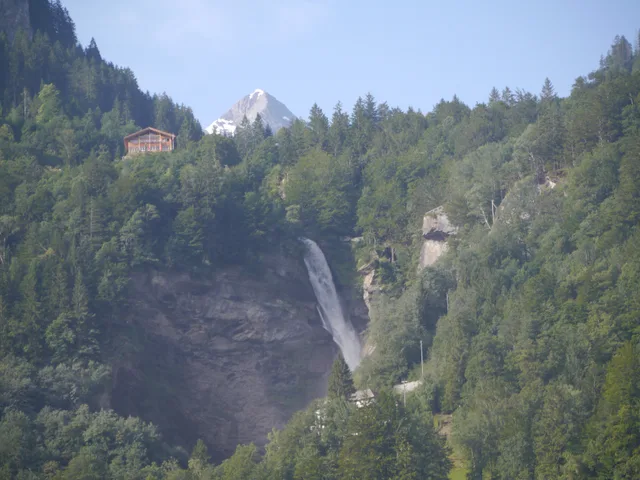
The Giessbach drops through fourteen cascades over 500 metres into the southern shore of Lake Brienz, below a Grandhotel that has been looking at it since the nineteenth century. The most common question about it online is whether you have to pay, and the answer is worth stating plainly at the top: no. The falls and every path around them are free.
Quick Facts
- Drop
- 14 cascades over 500 m
- Getting There
- 47 min from Interlaken Ost to the falls, by train and bus Journey time checked
- Duration
- 2–3 hrs
- Price
- Falls free · funicular CHF 14 return
- Season
- Funicular April–October
- Best for
- Families, walkers, photographers
Chapter 01
What costs money and what does not
This is the confusion the search results do not resolve, so here it is in full:
- The falls themselves — free. No gate, no ticket, no opening hours. The footpaths run up alongside the cascades and pass behind the water at one of the lower stages.
- The funicular — CHF 14 return, CHF 7 one way. Children aged 6 to 16 pay CHF 7 return, CHF 3.50 one way. With a BLS Seepass the adult return is CHF 11 — the only pass that reduces the fare on this line: the operator's tariff sheet lists the Swiss Travel Pass, the GA and Half Fare travelcards and Eurail as not valid. Children under 6, dogs and Grandhotel guests travel free. Operator tariff for 2026, checked on 14 October 2026.
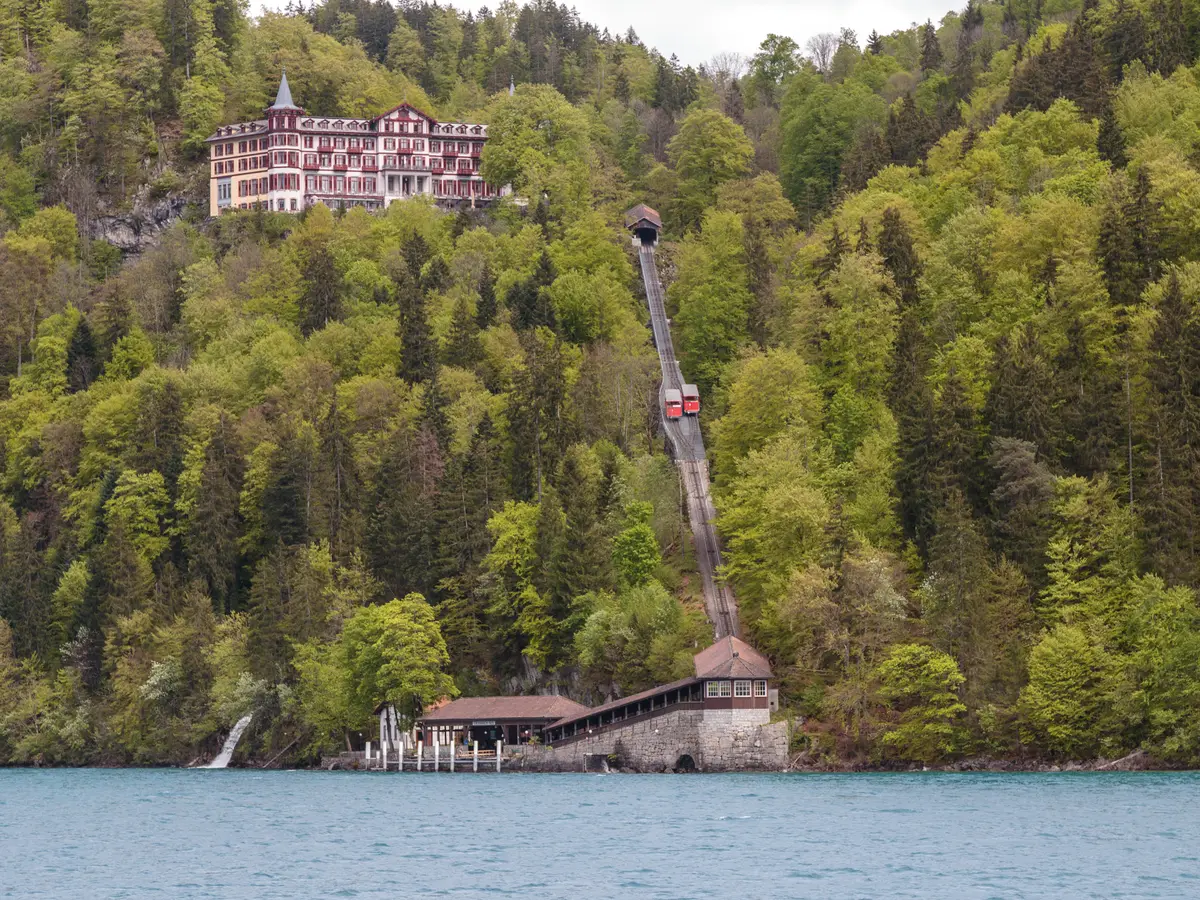
- Walking instead of riding — free. The funicular covers 345 metres of track and 98 vertical. On foot it is a short climb, and it costs nothing.
So a visit here can genuinely cost you nothing beyond getting to the valley. That is rare in this region, where a mountain railway usually stands between you and the view.
Chapter 02
The funicular, and a claim worth correcting
The Giessbachbahn opened on 21 July 1879, runs 345 metres and climbs 98, and connects the boat pier with the terrace at the hotel. It is the oldest funicular in Switzerland still in operation.
It is frequently described as the oldest in Europe. That is not right, and the record is easy to check: funiculars in Budapest (1870), Istanbul and Scarborough (both 1875) and Lyon (1878) all predate it. Switzerland's oldest is an accurate and still remarkable claim — Europe's oldest is not.
Chapter 03
Getting there
- Fastest — 47 minutes from Interlaken Ost to the falls: train to Brienz, then bus to Giessbach.
- Prettiest — about an hour by boat from Interlaken Ost. The boat docks at the foot of the funicular, so the connection is immediate. This is the one case on Lake Brienz where the boat is the better choice rather than the slower one.
- By car there is a car park above the falls, from which it is a short walk down.
Insider Tip
Come by boat and leave by bus and train. The arrival from the water — with the falls rising directly above the pier — is the whole point of the boat, and you avoid building the return around a single sailing. The bus from Giessbach to Brienz connects with the train back to Interlaken in about 36 minutes from the boat pier.
Chapter 04
Season and conditions
The funicular runs from 3 April to 6 December 2026 — daily from 12 to 25 October, and from 28 October only Wednesday to Sunday. Its last day of service is the same as that of the Lake Brienz boats, which stop sailing on 7 December; after that the falls can only be reached overland, which does not close them but does make the journey longer. The water is at its most powerful in late spring and early summer, when the snowmelt is running.
The path behind the water gets wet whatever the weather — a jacket is sensible, and the rock is slippery in the spray. The funicular is not wheelchair accessible; the operator recommends arriving by taxi from Brienz station for guests who need step-free access.
Related Articles
Back to overview: All things to do in Interlaken
Frequently Asked Questions
Do you have to pay to see Giessbach Falls?
No. The falls and the footpaths around them, including the section that passes behind the water, are free and open to anyone. What costs money is the funicular from the boat pier up to the hotel terrace: CHF 14 return for adults, CHF 7 one way, CHF 7 return for children aged 6 to 16 (operator tariff 2026, checked 14 October 2026). A Swiss Travel Pass is not valid on the funicular. You can walk that stretch instead and pay nothing at all.
How do I get to Giessbach Falls?
Fastest is 47 minutes from Interlaken Ost to the falls: train to Brienz and bus to Giessbach. Prettier is the boat, about an hour from Interlaken Ost, which docks directly at the foot of the funicular. By car there is a car park above the falls, from where it is a short walk down.
Is Giessbach Falls worth it?
Yes, and unusually so for something free. Fourteen cascades drop 500 metres into Lake Brienz, the paths lead right behind the water at one point, and the setting below the Grandhotel is genuinely theatrical. It takes two to three hours including the journey, which makes it one of the best-value half days in the region.
What is the oldest funicular in Switzerland?
The Giessbachbahn, opened on 21 July 1879 — it is the oldest funicular in Switzerland still in operation, running 345 metres and climbing 98. It is often described as the oldest in Europe, and that is not correct: funiculars in Budapest (1870), Istanbul and Scarborough (both 1875) and Lyon (1878) are older.
Can you walk behind Giessbach Falls?
Yes. The path passes behind the curtain of water at one of the lower stages — no ticket, no guide, no fixed opening time. It gets wet, so a jacket is sensible and the rock can be slippery in the spray.
When do the falls carry the most water?
Late spring and early summer, when the snowmelt is running. The funicular runs from 3 April to 6 December 2026, and from 28 October only Wednesday to Sunday; after that neither it nor the Lake Brienz boats run, though the falls themselves stay there.