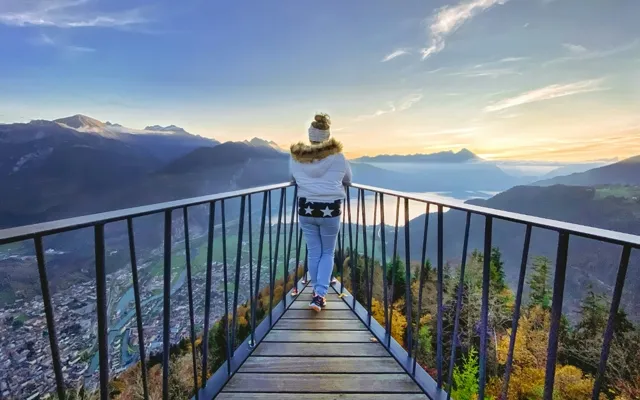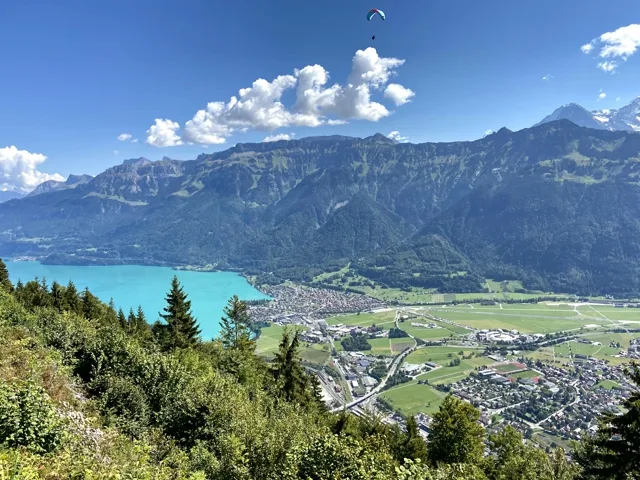
Interlaken sits between Lake Thun and Lake Brienz in the Bernese Oberland of Switzerland. At 568 m elevation, the town is the gateway to the Jungfrau Region with the iconic Eiger, Mönch, and Jungfrau peaks. Over 45 outdoor activities, historic attractions, and a unique Alpine setting make Interlaken one of Switzerland's most popular destinations — with over 3.5 million overnight stays per year. This ultimate travel guide covers everything you need for your visit.
Quick Facts
What are the top attractions in Interlaken?
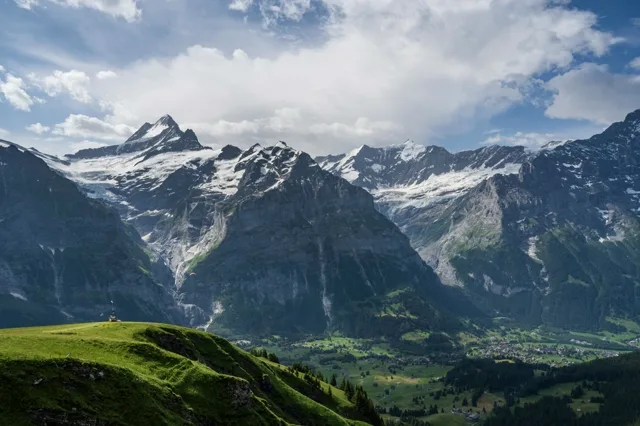
Interlaken and the surrounding Jungfrau Region offer some of Switzerland's most spectacular natural experiences. From mountain viewpoints to mystical caves and thundering waterfalls — these are the highlights you shouldn't miss:
More top destinations in the region:
- Jungfraujoch — Top of Europe — Europe's highest railway station at 3,454 m with Ice Palace, Sphinx observation deck, and Aletsch Glacier panorama.
- Schynige Platte — Alpine garden at 2,076 m with historic cogwheel railway and hiking paradise.
- Giessbach Falls — 500-metre cascade plunging directly into Lake Brienz, reached by historic funicular.
- St. Beatus Caves — Mystical stalactite caves above Lake Thun with 1 km of walkable passages.
What activities are there in Interlaken?
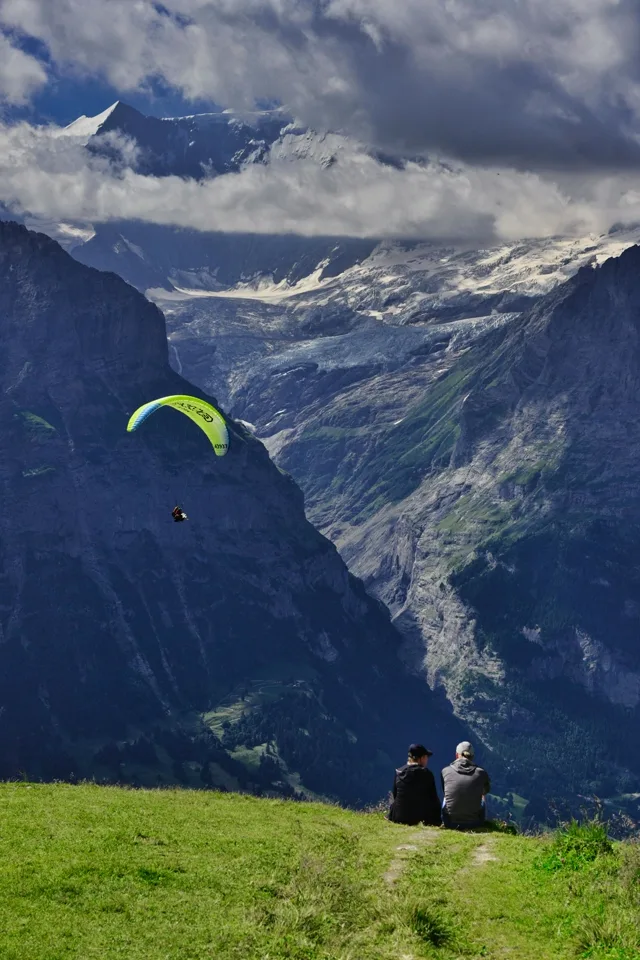
Interlaken is Europe's adventure capital. Over 45 outdoor activities await — from relaxing lake cruises to adrenaline-pumping extreme sports:
- Paragliding — Tandem flights over the Alpine landscape (from CHF 195)
- Canyoning — Gorge adventures in Saxeten canyon
- Hiking — 200+ km of marked trails for all difficulty levels
- Skiing — 200+ km of slopes in Grindelwald, Wengen, and Mürren
- Rafting — Whitewater on the Lütschine river
Insider Tip
Visit Harder Kulm at sunset — the funicular runs until 9 PM in summer. The view of the red-lit peaks of Eiger, Mönch, and Jungfrau reflected in the lakes below is an unforgettable experience that most day-trippers miss.
How do I get to Interlaken?
Interlaken has excellent rail connections via two stations — Interlaken Ost and Interlaken West. Check schedules on sbb.ch:
- From Bern: 50 minutes (direct train)
- From Zurich: 1 hr 50 min (via Bern)
- From Lucerne: 2 hours (GoldenPass Panoramic)
- From Basel: 2 hours (via Bern)
- From Geneva: 2 hrs 45 min (via Bern)
What is the weather like in Interlaken?
Interlaken sits at 568 m in a sheltered valley with a mild climate. Average temperatures range from –1°C in January to 24°C in July. The region receives around 1,200 mm of rainfall per year.
The best time to visit is June to September for hiking, paragliding, and lake activities (18–25°C). December to March are ideal for skiing in the Jungfrau Region. Spring (April/May) and autumn (September/October) offer mild weather and fewer tourists.
Frequently Asked Questions
What is special about Interlaken?
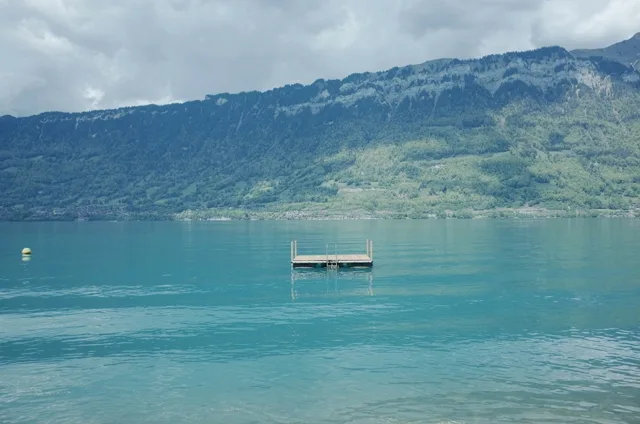
Interlaken sits uniquely between the turquoise Lake Brienz and the deep blue Lake Thun in the Bernese Oberland. The town is the gateway to the Jungfrau Region and is Europe's number one for adventure sports — with over 45 activities from paragliding to canyoning.
What are the top attractions in Interlaken?
The most popular attractions are Harder Kulm (local mountain with 360° panorama and Two-Lake Bridge), Jungfraujoch – Top of Europe (3,454 m), Schynige Platte, St. Beatus Caves, and Giessbach Falls. See our overview page.
How do I get to Interlaken?
By train: 50 minutes from Bern, under 2 hours from Zurich, 2 hours from Lucerne. Interlaken Ost and Interlaken West stations are served every 30 minutes. By car via the A8 motorway.
Which lake is in Interlaken?
Interlaken sits between two lakes: Lake Thun (west, 48 km² surface area) and Lake Brienz (east, 30 km², famous for its turquoise water). The Aare river connects both lakes and flows through the town centre.
When is the best time to visit Interlaken?
June to September for hiking and lakes (18–25°C). December to March for skiing. Spring and autumn offer mild weather and fewer tourists.
Related Articles